
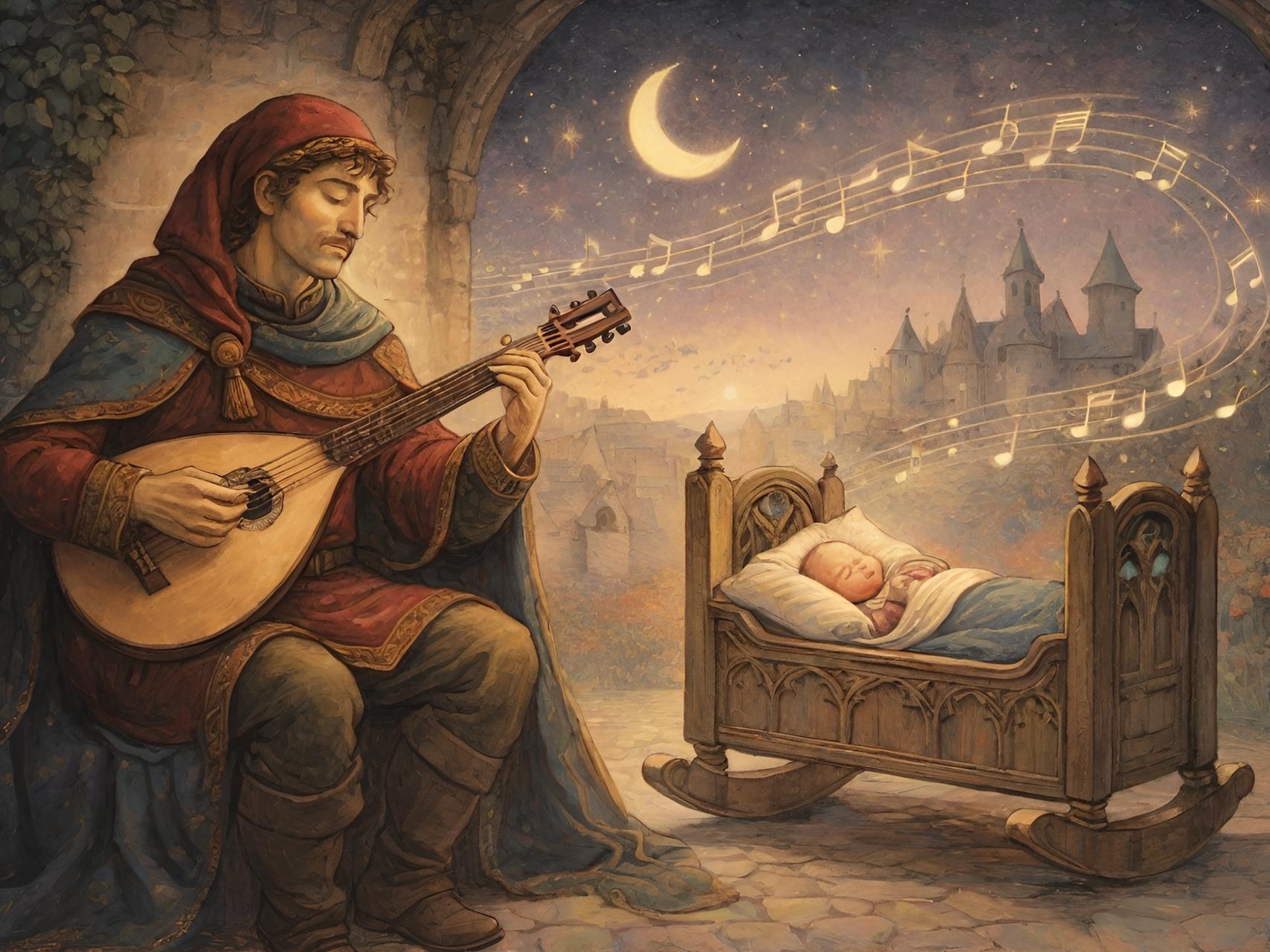
Lullabies are among the oldest forms of music, with roots stretching back to the earliest human societies. Long before written history, caregivers across cultures used gentle, repetitive songs to soothe infants, regulate breathing and heartbeat, and create a sense of safety. Archaeological and literary evidence from ancient civilisations such as Mesopotamia, Egypt, Greece, and Rome suggests that lullabies were already a familiar practice, often combining simple melodies with lyrics that expressed hopes for the child’s future or invoked protection from harm. These early songs were typically passed down orally, shaped by daily life, local beliefs, and the natural rhythms of speech and movement.
During the medieval and early modern periods, lullabies became more clearly documented as part of folk tradition. In Europe, they were closely linked to domestic life and women’s work, sung while rocking cradles or carrying out household tasks. Many included darker themes than modern listeners might expect, referencing poverty, illness, or parental anxiety, which reflected the realities of high infant mortality and social hardship. At the same time, religious influences introduced cradle songs about the infant Christ, blending sacred imagery with the intimate act of soothing a child. Similar developments occurred worldwide, with each culture adapting the lullaby to its language, musical style, and social concerns.
In the nineteenth and twentieth centuries, lullabies began to move from the private sphere into popular culture and education. Collections of folk songs preserved traditional cradle songs, while composers such as Brahms adapted the form for concert performance, most famously in his Wiegenlied. With the rise of recorded music, radio, film, and later television, lullabies reached wider audiences and became standardised through nursery songbooks and media. Today, lullabies continue to evolve, appearing in everything from children’s albums to film soundtracks, yet they retain their core purpose: using simple melody, repetition, and emotional warmth to comfort children and strengthen the bond between caregiver and child.
Further Reading
Peter Opie and Iona Opie, The Oxford Dictionary of Nursery Rhymes – A classic reference work that explores the origins, meanings, and historical development of nursery rhymes and lullabies in the English-speaking world.
Lorin McNeil, Lullabies and Nursery Rhymes from Around the World – A comparative collection that highlights how different cultures use lullabies, with useful commentary on themes and musical styles.
Patricia Shehan Campbell, Songs in Their Heads: Music and Its Meaning in Children’s Lives – An accessible academic study that examines how children experience music, including the role of lullabies in early development.
Anna Harwell Celenza, The Early Works of Musical Masters – Includes discussion of how composers such as Brahms drew on folk traditions like lullabies and cradle songs.
Garry Marvin and Jack Zipes (eds.), The Oxford Companion to Fairy Tales – While broader in scope, this offers valuable cultural context for lullabies as part of oral storytelling and childhood tradition.