
Release Date: 29th May 2026
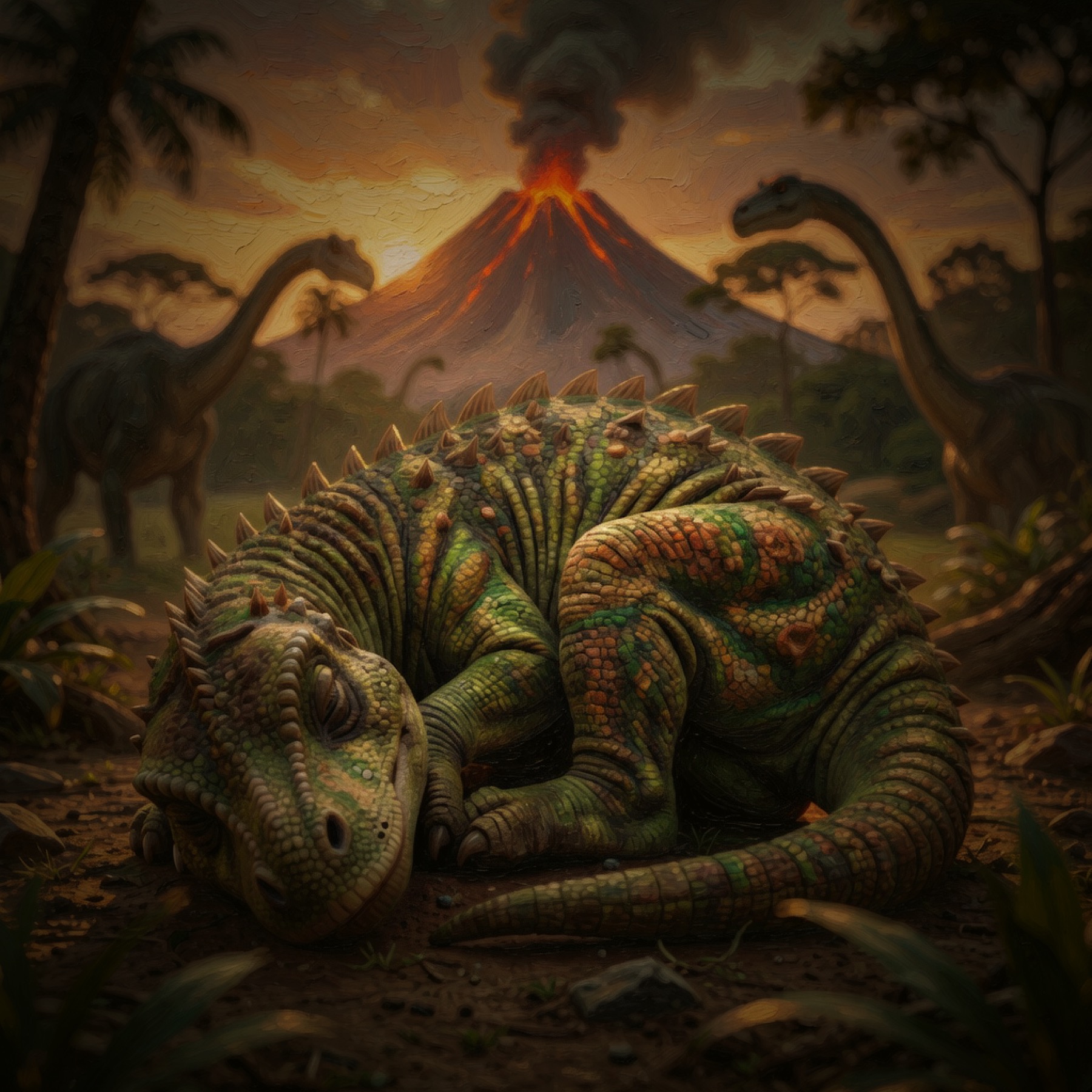
The seventh release by Lullabies by Lamplight takes us back in time to the prehistorical land of the dinosaurs, with Triceratops and T-Rex roaming the land, marine reptiles ruling the oceans, and magnificent pterosaurs gliding overhead.
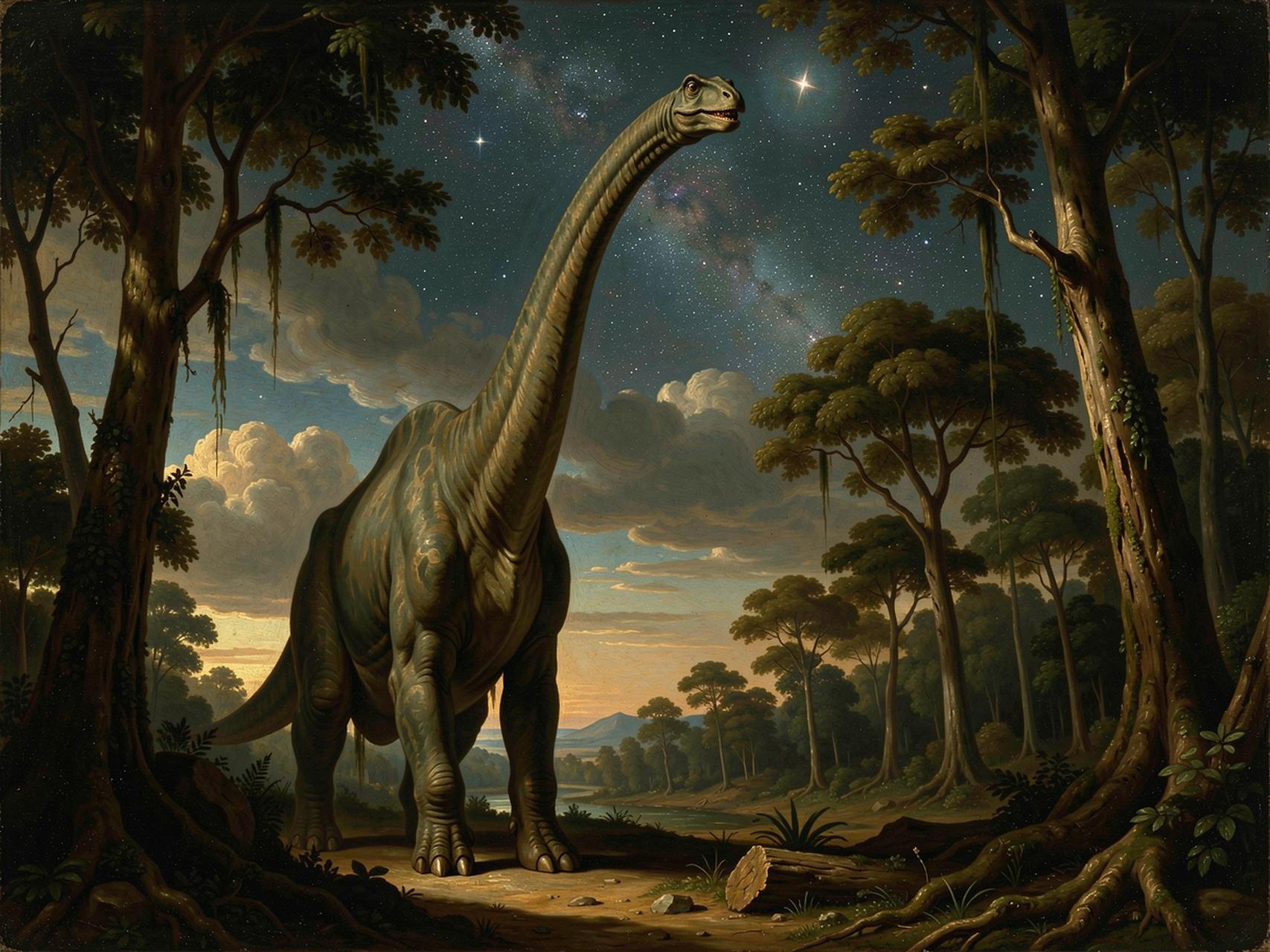
“Brachiosaurus
Your neck is enormous
Stretching high, high, high
Trying to reach he sky
Leaves are swaying soft and slow
Catch the moonlight’s silver glow
Stretching far, far, far
Trying to reach the stars”
Gentle acoustic guitar chords, piano chords and delicate harp arpeggios combine to give these songs the softest lullaby mood.
1. Welcome to Pangaea
2. The Great Cretaceous
3. Tyrannosaurus Rex
4. Brachiosaurus
5. Iguanodon
6. Deinonychus
7. Pterosaur
8. Mesozoic Seas
9. Triceratops
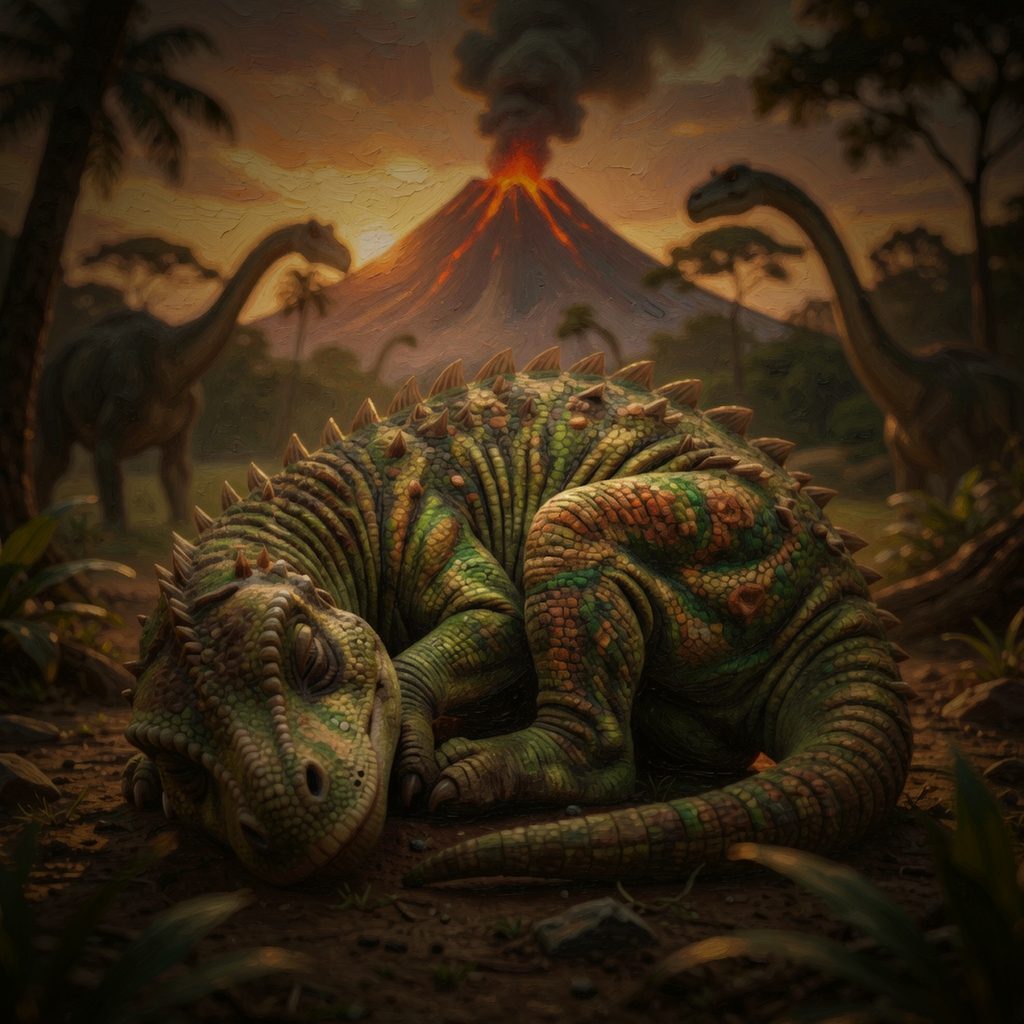
10. Dinosaur Snores
11. Stegosaurus
12. 65 Million Years
Why Dinosaurs?
Why did we decide upon a dinosaur theme for this collection of lullabies?
Dinosaurs and other Mesozoic creatures make surprisingly good subjects for lullabies because they combine wonder, mystery, and a sense of safe distance. They belong to a vanished world millions of years ago, so although they can be enormous and frightening, they pose no real-world threat to a child. Their strange names, spectacular shapes, enormous size, and prehistoric landscapes also provide rich material for imaginative, dreamlike songs. A lullaby can transform these potentially frightening creatures into peaceful figures: a baby T. Rex yawning beneath the stars, a sauropod stretching to reach the moon, or a pterosaur gliding through the prehistoric sky.
Children are particularly attracted to dinosaurs because they occupy an appealing space between reality and fantasy. Unlike dragons and other imaginary monsters, dinosaurs really existed, which makes them feel like “real monsters” that children can investigate and understand. At the same time, they are so strange and extreme that they retain the excitement of fantasy. Learning their names and characteristics also allows children to become experts, classify different species, and feel that they have mastered a fascinating world. Their combination of enormous power and vulnerability is equally appealing: a creature that might seem terrifying can also be portrayed as a funny, curious, protective, or sleepy parent.
This helps explain why dinosaurs appear so frequently in children’s books, television, toys, songs, and bedtime stories despite their scary appearance. Children’s media often makes frightening subjects manageable by placing them in a safe context, allowing children to examine, name, understand, and even laugh at them. Dinosaurs are especially effective because they represent a kind of “safe danger”: they are exciting and powerful, but impossibly distant. For a collection of lullabies, this creates a particularly appealing progression from activity to stillness—the prehistoric world becomes quiet, predators stop hunting, parents settle with their young, and even the greatest dinosaurs go to sleep. In that sense, the child is not being frightened by monsters but being invited to imagine that even the monsters have gone to bed.