
Release Date: 3rd April 2026
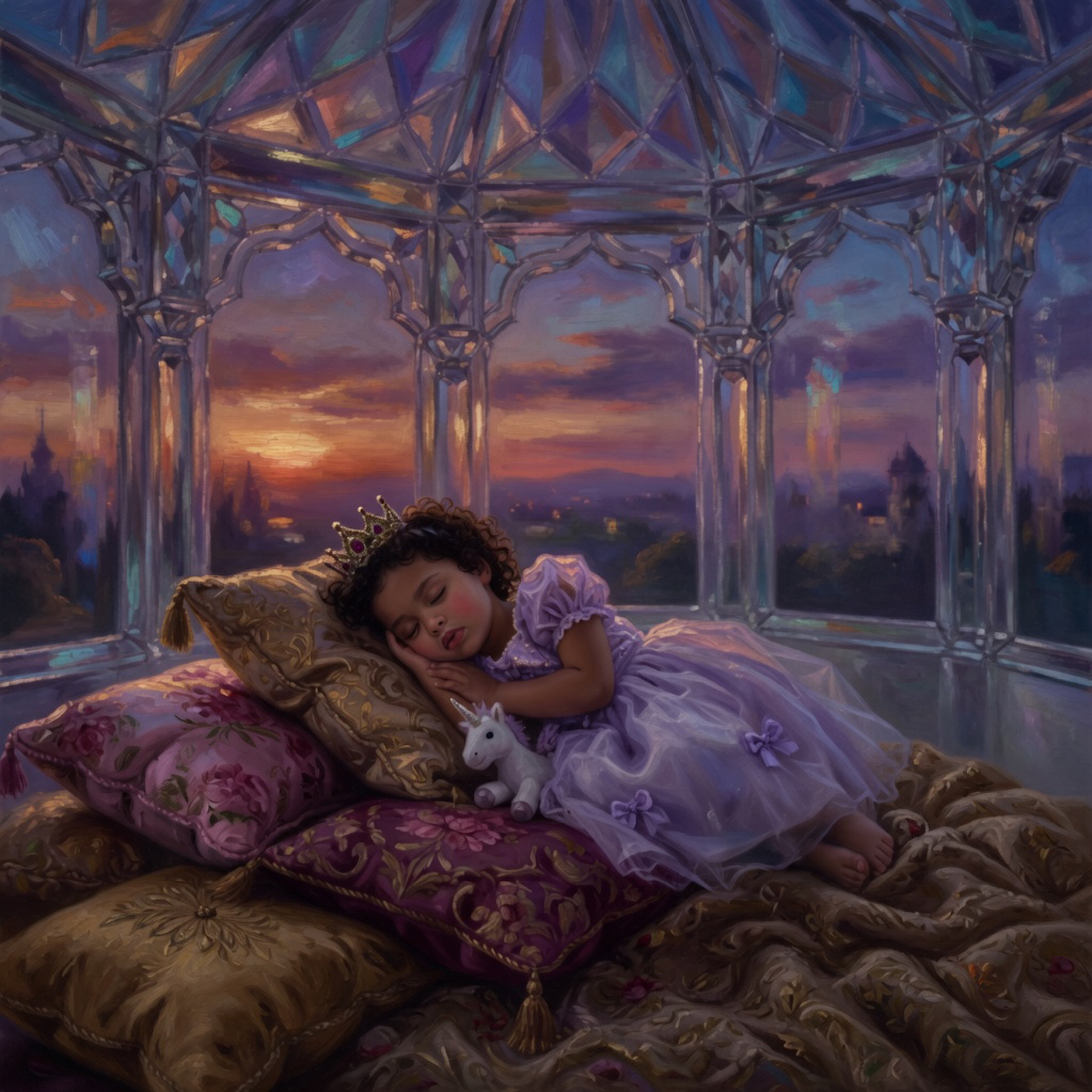
The sixth release by Lullabies by Lamplight leads us down regal corridors and elegant spiral stairs to an ornate palace ballroom, where we waltz with princesses. Settle down for gentle fairy tale lullabies.
“Three small mice by candlelight
Sewing softly through the night
Tiny paws and tails that sway
Stitching ’til the break of day
Silver thread, silver thread
Shining and enchanted
Silver thread, soft and slow
Make a gown with a silver glow”
Gentle acoustic guitar chords, delicate harp arpeggios and gentle woodwind flourishes combine to give these lullabies the softest lullaby mood.
1. A Gown of Silver Thread
2. The Blue Bird
3. Briar Rose
4. The Night Garden of Glass Roses
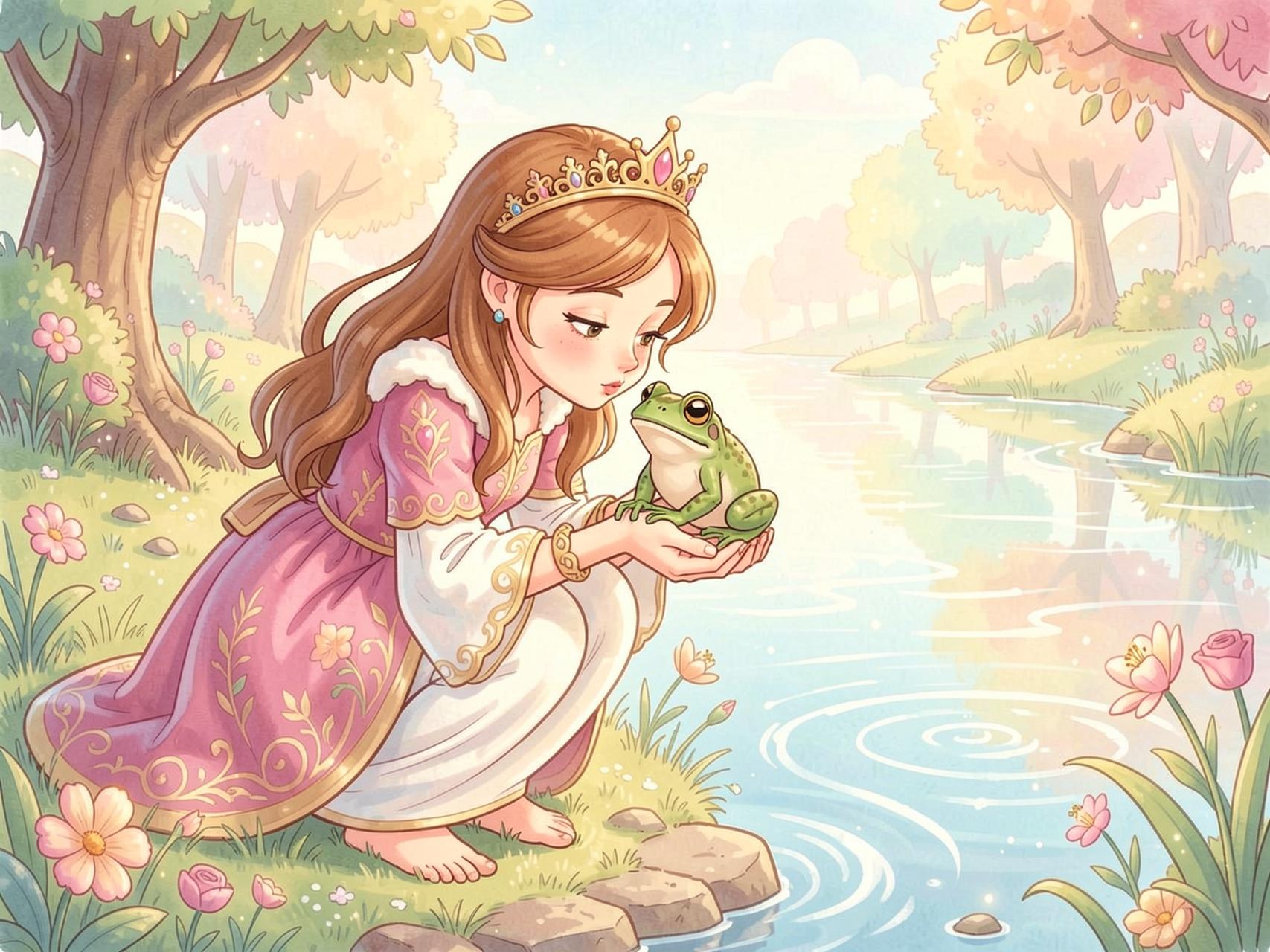
5. Kissing Frogs
6. Twelve Princesses Beneath the Hill
7. Follow a Lantern to the Midnight Ball
8. The Princess and the Pea
9. The White Cat’s Palace
10. The Wild Swans’ Sister
11. The Princess Under the Glass Mountain
12. East of the Sun, West of the Moon
Why Princesses?
Why did we decide upon a princess theme for this collection of lullabies?
Princesses remain deeply appealing in children’s stories because they embody a blend of wonder, vulnerability, and possibility that is easy for young imaginations to grasp. Fairy tales often place princesses in enchanted forests, hidden castles, or magical kingdoms where ordinary rules bend toward adventure and transformation. These characters are rarely powerful in the modern superhero sense; instead, they succeed through kindness, patience, curiosity, or courage. That emotional accessibility matters. A child can picture themselves inside the story, wearing the crown, befriending talking animals, or discovering secret doors. The princess trope also offers a reassuring narrative structure: danger appears, but harmony eventually returns. In childhood, when the world can feel unpredictable, stories with clear emotional resolutions provide comfort and stability.
Fairy tales also endure because they work on a symbolic level that children intuitively understand long before they can fully analyze it. Castles represent safety, forests represent uncertainty, and magical helpers symbolize hope arriving at the right moment. Princesses often stand at the center of these symbols as figures moving from confusion to confidence or isolation to belonging. Across generations, cultures have reshaped the princess archetype to reflect changing values, but the emotional core remains recognizable: the dream that gentleness and bravery can coexist. Parents and caregivers continue returning to these stories because they carry nostalgia as well. Reading the same tales passed down through families creates continuity between generations, turning bedtime stories into shared rituals rather than simple entertainment.
Those same qualities make fairy tales especially well suited for soothing lullabies. Lullabies depend on repetition, softness, predictability, and imagery that eases a child toward sleep, and fairy tales naturally provide all of those elements. Their settings are filled with moonlit towers, quiet gardens, drifting clouds, and shimmering stars — images that fit effortlessly into calm, melodic language. The emotional rhythms of fairy tales are gentle enough to simplify into reassuring refrains: the princess is safe, the kingdom is peaceful, morning will come. Unlike fast-paced modern stories driven by noise or suspense, fairy tales often unfold with a dreamlike pace that mirrors the drifting sensation of falling asleep. When transformed into lullabies, these stories preserve their magic while softening their conflicts, leaving behind an atmosphere of warmth, wonder, and security that helps children settle into rest.